 DataViz Kit
 Imagine you are sitting in a high-stakes meeting. The air conditioning is humming a bit too loud, and someone is projecting a spreadsheet that looks like a swarm of ants attacked a grid of numbers. You squint. The CEO squints. Everyone nods, pretending to understand, but deep down, nobody has a clue what row 45, column Z actually implies for next quarter's budget.
We've all been there. It's the classic tragedy of modern business: we have more data than ever, but less clarity than we'd like. This is exactly where a Data Visualization Consultant steps in, acting less like a tech support worker and more like a translator for a foreign language that only computers speak fluently.
In this guide, we're going to break down exactly what these professionals do, why your business probably needs one yesterday, and how they turn boring spreadsheets into interactive dashboards that actually make sense. If you have ever felt the urge to throw your laptop out the window because Excel crashed again, you are in the right place.
A data visualization expert doesn't just make things "look pretty"—though that is part of it—they fundamentally change how your organization consumes intelligence. They turn "what happened?" into "here is what we need to do." By the end of this read, you will have a solid grasp of the industry, the skills required, and how to hire the right talent to turn your data swamp into a clear, navigable lake.

Why Your Business is Drowning in Data (And Starving for Wisdom)
Let's be honest for a second. We are hoarders. Digital hoarders. Companies collect everything: customer clicks, time on page, supply chain timestamps, coffee consumption rates (okay, maybe not that last one, but give it time). But having data and using data are two very different sports.
It's like owning a library where all the books are thrown in a pile in the center of the room. Sure, the information is there, but good luck finding Moby Dick when you need it. A business intelligence dashboard is supposed to fix this, but often it just adds to the noise. Without a proper strategy, dashboards become "junkyards" of charts—a pie chart here, a bar graph there, all screaming for attention but saying nothing. This is the "analysis paralysis" zone.
"When you hire a consultant, you aren't paying for the charts; you are paying for the subtraction."
You are paying someone to look at that mountain of data and say, "Ignore 90% of this. These three metrics are the only ones that predict your revenue growth." That is the value of visual analytics services. They don't just show you the data; they show you the signal in the noise.
What is a Data Visualization Consultant?
If we strip away the fancy titles and the LinkedIn buzzwords, what are we actually talking about here? A Data Visualization Consultant is, at their core, a professional simplifier. Think of them as the bridge between your IT department's complex databases and your CEO's need for a quick answer.
They are experts who specialize in taking raw, messy numbers and transforming them into clear, visual representations—like charts, graphs, and interactive dashboards—that humans can actually understand in seconds.
When you hire a consultant for Data Strategy Consulting, you aren't just buying a few pie charts. You are hiring someone to look at your business problems, find the data that answers those problems, and present it in a way that makes the solution obvious. They use tools like Tableau, PowerBI, or custom code (like D3.js) to build systems that allow you to see the health of your business at a glance, without needing a PhD in statistics to interpret the results.
What Does a Data Visualization Consultant Do?
It is a common misconception that these consultants just sit around coloring in shapes all day. While color theory is important, the role is far more strategic.
The Translator of Geek-Speak
The biggest friction point in any company is usually between the technical team (who control the data) and the executive team (who need the data). The tech team speaks in SQL queries and API endpoints; the executives speak in ROI and KPIs. A skilled Data Visualization Consultant bridges this gap. They sit in the middle, fluent in both languages. They take the complex backend logic and translate it into a front-end interface that a CEO can use on their iPad while waiting for a flight.
The Architect of Dashboards
Building a dashboard is a lot like building a house. You don't start by picking out the curtains; you start with the blueprint. A consultant will interview stakeholders to understand the "user journey" of the data. Who is looking at this? The marketing intern needs different data than the CFO. A great consultant builds interactive data charts tailored to specific audiences, ensuring that the user isn't overwhelmed by irrelevant metrics.
The Storyteller
Humans are wired for stories, not spreadsheets. If you tell a board of directors that "customer churn increased by 0.4%," they might nod. If you show them a trend line dipping sharply, specifically after a recent price change, accompanied by a heatmap of customer complaints, you have told a story. Data storytelling is the art of combining data with narrative to drive action. It is about answering the "so what?" question before anyone has to ask it.
Essential Skills to Look For
So, you are convinced you need help. What should you look for? It's not enough to find someone who knows how to drag and drop in Tableau. The ideal candidate is a "unicorn"—a mix of artist, scientist, and business strategist.
- Technical Proficiency: Obviously, they need to know the tools. Whether it's Tableau vs PowerBI expert debates, or knowledge of Looker and Qlik, they need to be hands-on. For more bespoke needs, knowledge of coding libraries like D3.js or Python is a huge plus.
- Design Thinking: This is non-negotiable. They need to understand UI/UX principles. How does the eye move across a screen? What colors signify "danger" versus "opportunity" without being culturally insensitive? (Fun fact: Red means "stop" or "bad" in the West, but "good luck" or "prosperity" in parts of Asia. Your consultant should know that context matters!)
- Soft Skills: They need to be able to push back. A client might ask for a 3D exploding pie chart (the horror!). A good consultant will gently, but firmly, explain why that is a terrible idea and propose a better alternative, like a simple bar chart or a tree map.
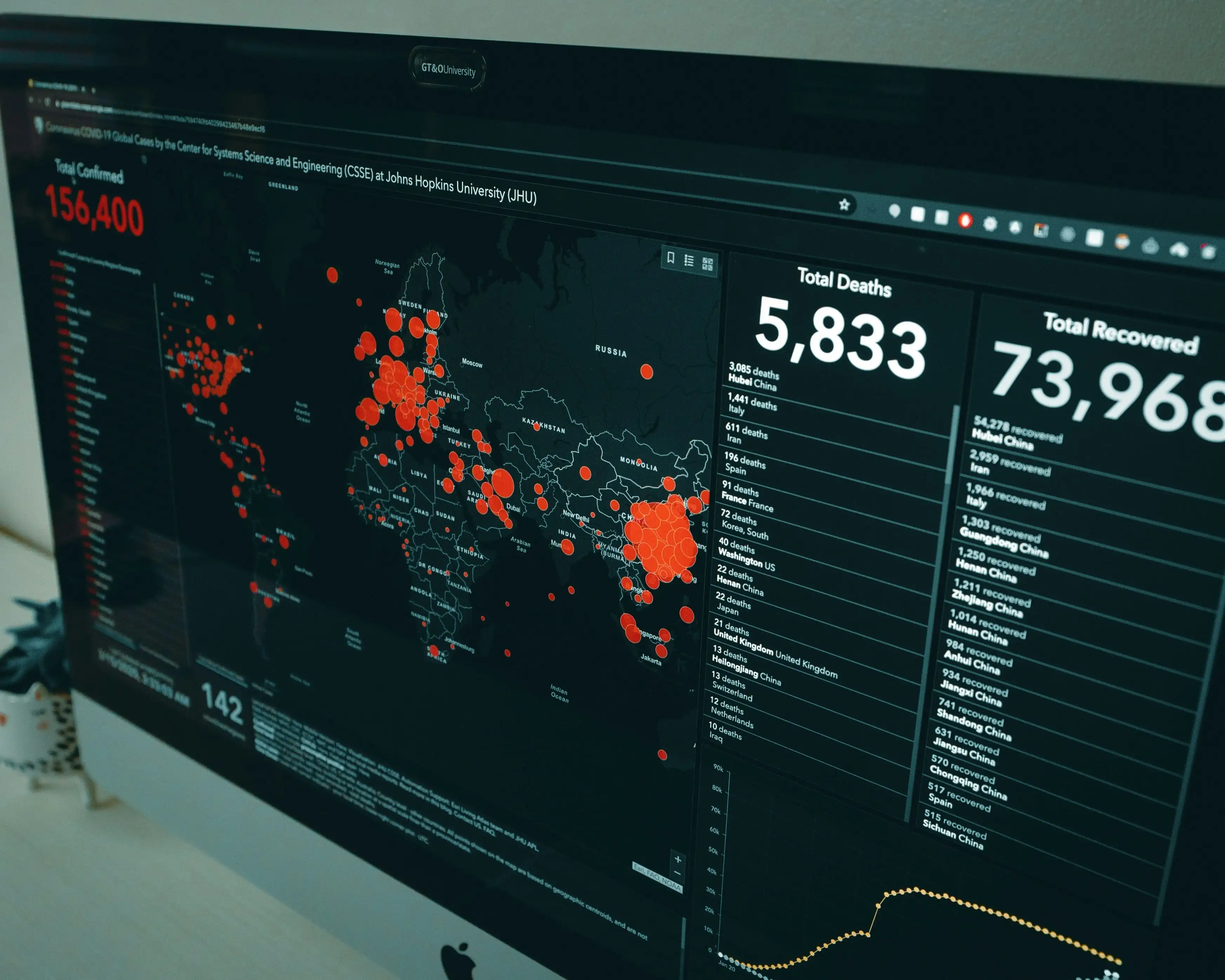
Tools of the Trade: It's Not Just About the Software
Speaking of tools, the landscape is vast. You have the heavy hitters like Tableau and Microsoft PowerBI, which are fantastic for enterprise-level corporate data reporting. They connect to massive SQL databases and can crunch millions of rows. But sometimes, you don't need a sledgehammer to crack a nut. Sometimes you just need a quick, beautiful visual for a presentation or a blog post. This is where lighter, web-based tools come in handy.
For instance, if you are a web developer or a content creator looking to embed quick visuals without firing up an enterprise server, you might look at our own DataViz Kit. It's designed for those moments when you need specific tools like a pie chart maker or a heatmap generator without the overhead of a massive BI platform. It's perfect for adding that visual punch to your web projects.
We often see companies overspending on licenses for complex software when a simpler, more targeted solution would have sufficed. A smart Data Strategy Consulting partner will audit your current stack and tell you if you are overpaying for features you never use.
The ROI of Good Visualization
"Okay," you say, "but how does this make me money?" Great question. The ROI of data visualization comes in three forms: Speed, Accuracy, and Discovery.
- Speed: How many hours does your team spend manually updating Excel sheets every Monday morning? A consultant automates this. If you save 10 hours a week across a 5-person team, that's 2,600 hours a year. Do the math on those salaries.
- Accuracy: Manual reporting is prone to human error. "Fat finger" mistakes in spreadsheets have cost companies millions. Automated pipelines built by experts remove the human error component.
- Discovery: This is the big one. We worked with a retail client who thought their sales were dipping because of the economy. After visualizing their data on a geospatial map, we realized the dip was only happening in regions with a specific weather pattern. They adjusted their inventory logistics and recovered 15% of that "lost" revenue. They wouldn't have seen that in a spreadsheet.
Off the Topic: The Art of Seeing
It's funny how we treat "vision" as something automatic. We open our eyes, and we see, right? But artists have known for centuries that seeing is an active process. Claude Monet painted the same haystacks at different times of day just to show how light changes perception.
Data visualization is kind of the Impressionism of the business world. We are taking raw "light" (data) and arranging it so the human brain can process the "image" (insight). If you think about it, a scatter plot is just pointillism with a paycheck. It's about organizing chaos into form. So, when you hire a consultant, you are basically hiring an art curator for your numbers.
How to Choose the Right Consultant for Your Project
Finding the right Data Visualization expert can be tricky. The market is flooded with people who took a two-week course and now call themselves experts.
- Portfolio is King: Do not just look at the screenshots; ask to interact with the dashboards if possible. Are they intuitive? Do they load quickly?
- Ask About Process: If their answer to "how do you start?" is "I open the software," run away. The answer should be, "I start by talking to your team and drawing on a whiteboard." User-Centric Dashboard Design starts with people, not pixels.
- Look for specialized skills: If you need visuals for a website, you need someone who understands web standards (HTML/CSS/JS). If you need internal financial reporting, you need someone who understands accounting principles.
Future Trends in Data Visualization
The field is moving fast. We are seeing a massive shift towards AI-driven insights. Instead of you looking for the trend, the dashboard tells you, "Hey, look at this anomaly in Q3." Natural Language Processing (NLP) is also getting huge—imagine typing "Show me sales in Texas vs Florida" into a search bar, and a chart instantly pops up.
Mobile-first reporting is another big one. Executives are tired of needing a dual-monitor setup to read a report. They want it on their phone, and they want it to look good.
Conclusion
Data is the new oil, as the cliché goes, but unrefined oil is just a sticky mess that ruins the carpet. A Data Visualization Consultant is the refinery. They take the raw, messy, complex reality of your business and refine it into high-octane fuel for decision-making.
Whether you are looking to overhaul your entire corporate data reporting structure or just need a few interactive dashboards to wow a client, the investment in professional visualization pays for itself in clarity and speed. Don't let your data sit in the dark.
If you are ready to start visualizing your data effectively, you can start small. Check out our pie chart maker tool (a part of the free data visualization tools) to see how easy it can be to turn simple numbers into clear visuals. It's a great first step toward better data literacy.
The world is complex enough. Your data doesn't have to be. Get a consultant, clean up your dashboards, and start seeing your business with $20/20$ vision.